
Zero Sugar vs No Added Sugar vs Sugar Free: Read the Back, Not the Front

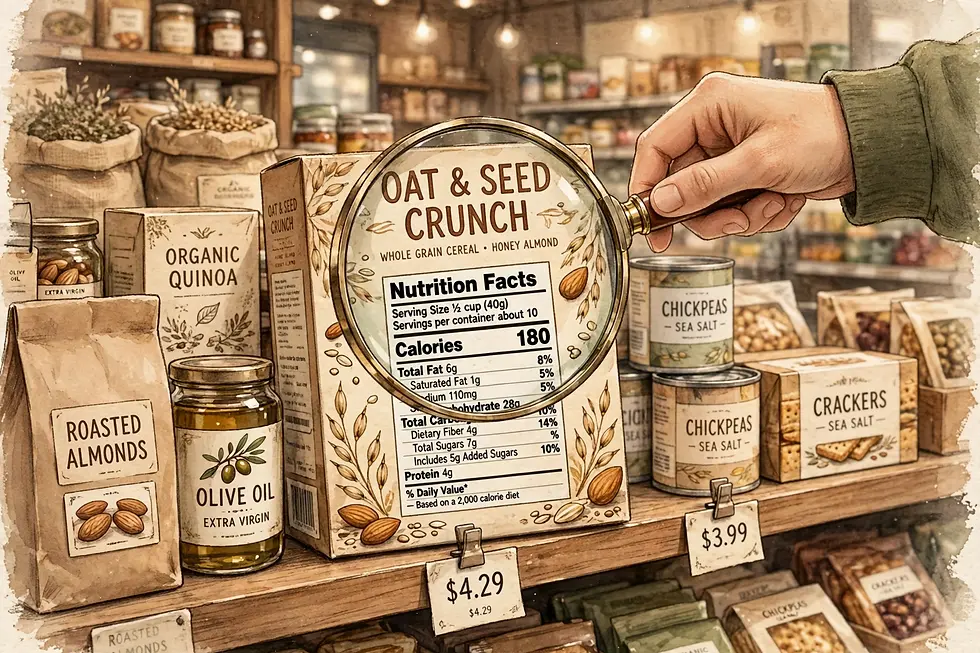
The front of the package is marketing. The back of the package is the truth. If you only learn one skill for the holiday season, make it this one: how to read a sugar claim in ten seconds flat, before the box goes in your cart.
The Decoder: What Each Claim Actually Means
These terms are not interchangeable, and the Food and Drug Administration (FDA) defines most of them in its food labeling rules (21 CFR 101.60(c)). Here is the plain-English version:
Sugar free (also sold as zero sugar, no sugar, or sugarless): less than 0.5 grams of sugars per serving. That is the FDA's definition, and it applies per serving, not per package. Eat three servings and you have eaten sugar, claim or no claim. It also does not mean low calorie unless the label says so.
No added sugars (or without added sugars): no sugar or sugar-containing ingredient was added during processing. It says nothing about how much natural sugar is already in the food. A cup of 100% orange juice can honestly say no added sugar and still carry about 21 grams of sugar, all of it from the fruit itself.
Reduced sugar (or less sugar): at least 25% less sugar than the regular version of the same food. Reduced compared with what, though? A reduced-sugar cookie can still be a sugary cookie. It is a comparison, not a promise.
Unsweetened (or no added sweeteners): these are factual statements, not defined FDA
claims. They tell you nothing by themselves. Check the Total Sugars line anyway.
The Asterisk Trap
Watch for the little star. A sugar-free claim can still list an ingredient that contains sugar, as long as the ingredient list carries an asterisk explaining that it adds a trivial, negligible, or dietarily insignificant amount of sugar. The asterisk is doing real work, so read it.
The same trick shows up in reverse. A brand can splash No Added Sugar across the front while the asterisk quietly limits that claim to one flavor. We covered one real example recently: a coconut-water brand's No Added Sugar claim applies to its Original flavor only, while another flavor in the same line contains cane sugar. The front of the package did not lie. It just did not tell the whole story.
The Ten-Second Check
Ignore the front. Flip the package and check three things, in this order:
Total Sugars. This is the whole number, from every source. This is the number that
matters most.
Includes Added Sugars. A true no-added-sugar product shows 0 grams here. If it does not, the front claim does not cover what you are holding.
The ingredients list. Look for sweeteners that are not sugar: sugar alcohols, allulose,
monk fruit, stevia. They are not counted in Total Sugars the same way, and they explain how a sugar-free product still tastes sweet.
One more number worth knowing: on the Nutrition Facts panel, 5% or less of the Daily Value is low, and 20% or more is high. A product can be honest and still be a bad deal. The back of the package will tell you which one it is, every time.
Bottom line: the front tells you what they want you to feel. The back tells you what is actually in it. Read the back.


Comments